Bangalore has become one of India’s most important destinations for professionals looking to build careers in Data Science, Artificial Intelligence and Machine Learning. The city’s strong technology ecosystem, startup environment and presence of companies working with data and AI have created growing interest in these career paths.
For students and working professionals, this has also led to a large number of training options. A search for a Data Science course in Bangalore can bring up institutes offering everything from beginner-level Python programs to advanced Data Science, AI and Machine Learning courses. With so many choices available, deciding which program is actually worth your time and investment can be difficult.
The right course should be about more than completing a syllabus. Learners should consider the curriculum, practical projects, mentor support, learning format, industry-relevant tools and career preparation before enrolling. Placement assistance can also be an important consideration, particularly for freshers and career switchers, but it is equally important to understand what that support actually includes.
This guide explains the key factors to consider when choosing a Data Science course in Bangalore, the skills you should look for in a modern curriculum, the difference between online and offline learning, and what to evaluate when an institute offers placement assistance. The objective is to help you compare your options and choose a learning program that matches your career goals.
Slightly more commercial version
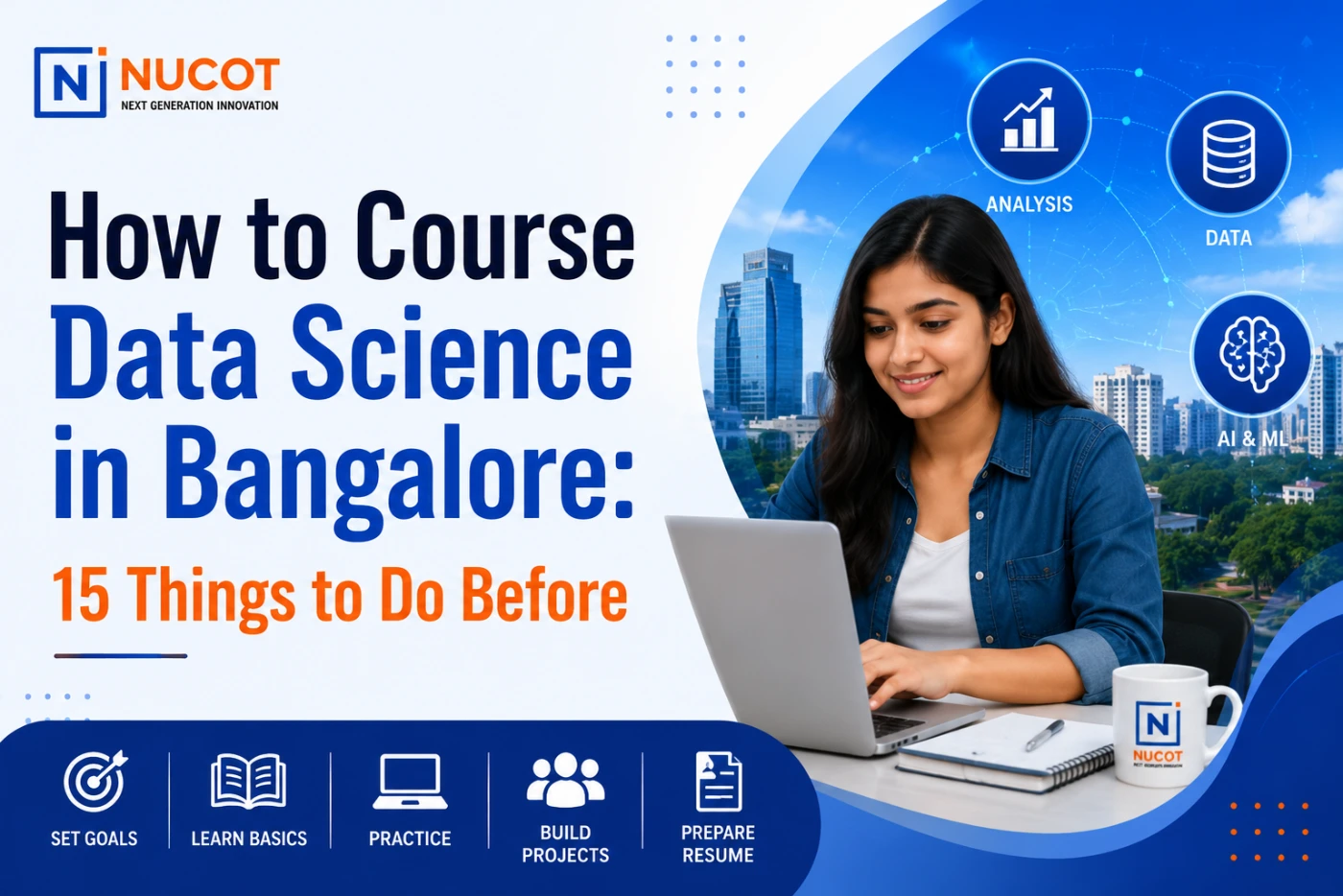
If you’re comparing a Data Science course in Bangalore with placement, don’t make the decision based only on course fees, duration or placement claims. A meaningful training program should help you develop practical skills that can be demonstrated through projects and discussed confidently during interviews.
From Python and SQL to Data Analysis, Machine Learning, Artificial Intelligence and Generative AI, the technology landscape is broader than it was a few years ago. This makes it important to understand which skills are relevant to your intended career path and whether a course provides enough practical exposure to apply them.
Before enrolling, prospective students should also look at the trainers, project work, mentorship, online or offline learning options, career preparation and student experiences. Comparing these factors can help you distinguish between a course that simply covers topics and one that provides a more structured path toward becoming job-ready.
Top data science and AI career paths to pursue in 2026
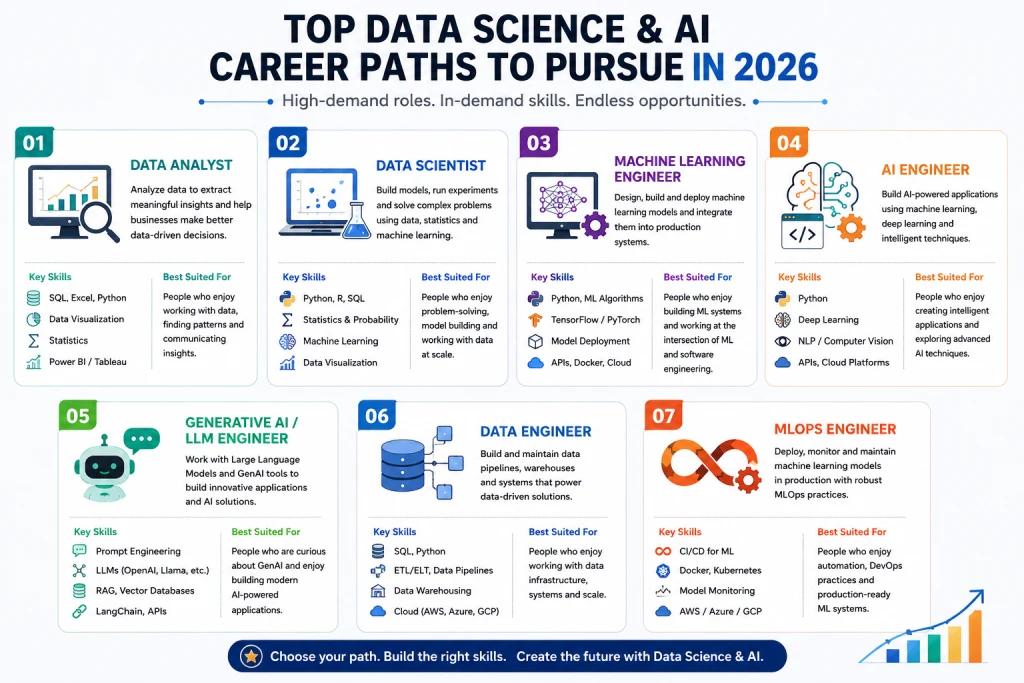
Why Data Science and AI Skills Matter for Today’s Career Landscape
Data is now part of how businesses make decisions, understand customers, improve operations and develop new products. At the same time, Artificial Intelligence is changing how organisations approach automation, analytics and software development.
This shift has increased interest in professionals who can work across data, programming and AI technologies. For students and working professionals, that makes learning the right combination of technical and practical skills an important part of career preparation.
However, choosing a Data Science and AI course in Bangalore should not be based simply on the popularity of the field. The quality of the learning program, practical exposure and relevance of the curriculum matter just as much.
Bangalore’s Growing Technology and AI Ecosystem
Bangalore has a large concentration of technology companies, startups, IT organisations and global businesses. The city is also home to professionals working across software development, cloud computing, analytics, Data Science and Artificial Intelligence.
This ecosystem creates opportunities for people with different technical backgrounds. Data professionals may work on business analytics, predictive modelling, customer insights, automation, Machine Learning applications or AI-based solutions.
For learners, this makes Bangalore an attractive location to explore Data Science training in Bangalore and related technology programs.
However, being located in a technology hub does not automatically make a training program industry-oriented. Students should look at whether the course actually provides opportunities to apply what they learn.
Data Science Is More Than Learning Python
Python is an important part of many Data Science programs, but becoming a Data Science professional involves more than learning a programming language.
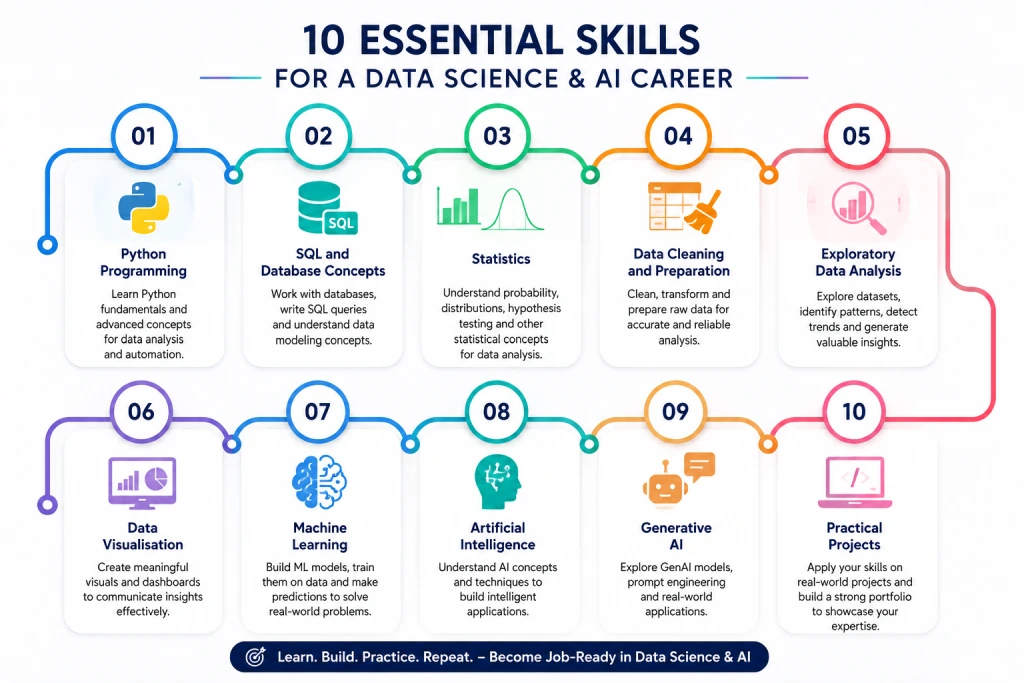
Practical Skills Can Make Training More Valuable
One of the biggest differences between learning about Data Science and actually developing Data Science skills is practical application.
A student may understand how a Machine Learning algorithm works theoretically but still struggle to apply it to an unfamiliar dataset.
Skills Matter More Than Course Completion
Completing a certificate does not automatically make someone ready for a Data Science or AI role.
Employers may evaluate a candidate’s ability to understand problems, work with data, write code, explain technical decisions and demonstrate practical knowledge.
This is why students should focus on what they can do after completing a course rather than simply what certificate they will receive.
A learner who can confidently explain a project, describe the dataset used, justify a particular approach and discuss the results is in a stronger position than someone who has only memorised concepts.
Choosing the Right Learning Format
Students in Bangalore can also choose between online and classroom-based learning.
Online Data Science Training in Bangalore can provide flexibility for working professionals and students who prefer learning remotely.
Offline Data Science Training in Bangalore may be more suitable for learners who prefer classroom interaction, structured schedules and direct access to trainers.
A Step-by-Step Roadmap to Build Data Science and AI Skills
tarting Data Science can seem overwhelming because the field includes programming, statistics, databases, Machine Learning, Artificial Intelligence and Generative AI. Trying to learn everything at once can make the process unnecessarily difficult.
A better approach is to follow a structured progression where each stage builds on the previous one.
Nucot Data Science with Python & Gen AI learning path follows this kind of progression, beginning with foundational data and Python skills before moving toward Machine Learning, Generative AI and practical application
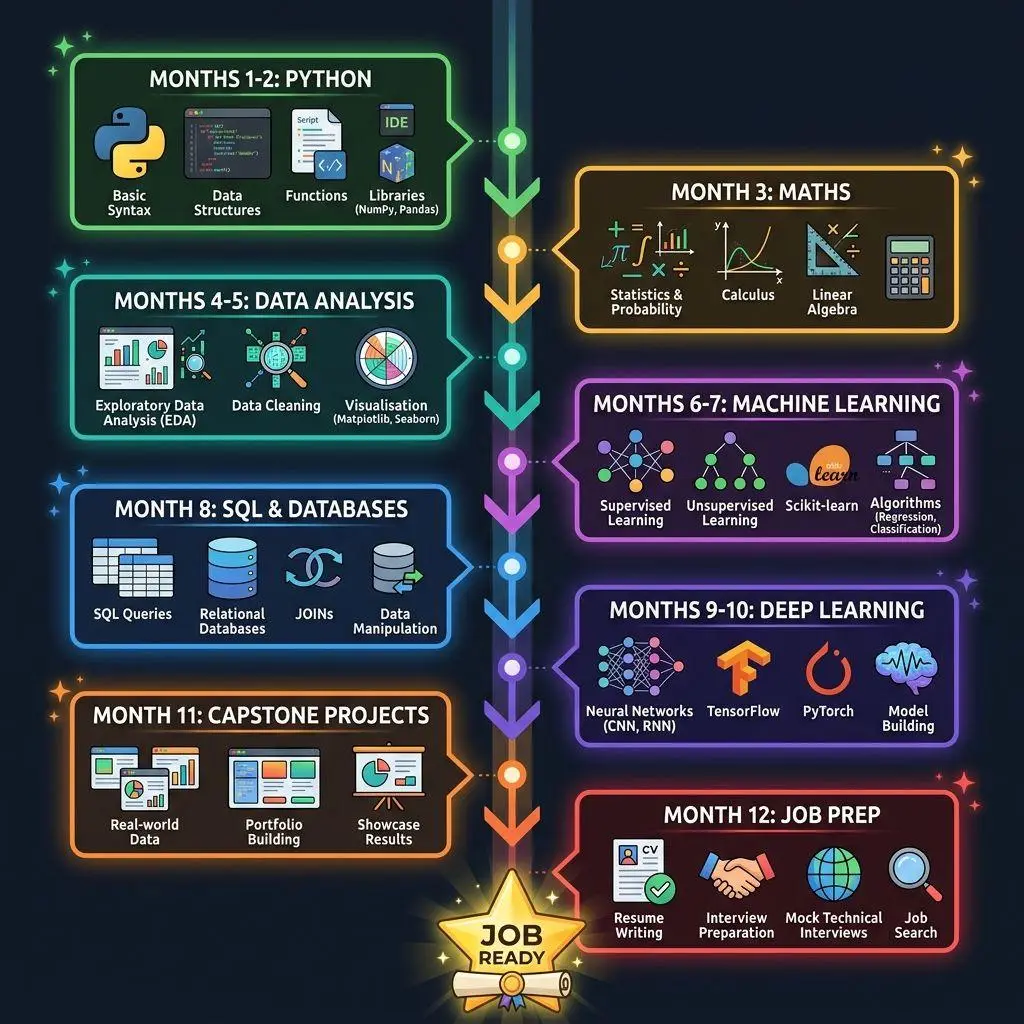
Stage 1: Build the Data and Python Foundation
The first stage should focus on understanding how data is handled and how Python can be used to work with it.
Learners can begin with Python fundamentals and gradually move into libraries and tools used for data manipulation and analysis. SQL and basic statistics are also important because Data Science involves working with databases as well as interpreting data correctly.
The objective at this stage is not to rush into advanced AI. It is to develop enough programming and analytical understanding to work confidently with datasets.
Stage 2: Move Into Machine Learning
Once the fundamentals are established, learners can progress into Machine Learning.
This stage introduces concepts such as supervised and unsupervised learning, model training, evaluation and tuning. Practical exercises become increasingly important because Machine Learning is easier to understand when learners can see how models behave with actual data.
NUCOT’s current course structure includes supervised and unsupervised learning, Scikit-learn, model evaluation and tuning, along with an introduction to TensorFlow and Deep Learning.
Stage 3: Explore Generative AI and LLMs
Generative AI adds another layer to the modern Data Science and AI skill set.
After understanding programming, data analysis and Machine Learning fundamentals, learners can begin exploring concepts related to Large Language Models, prompt engineering, retrieval-based applications and AI-powered solutions.
The goal should not be simply to learn how to use an AI tool. Students should understand where Generative AI fits into real applications and how it can be combined with existing technical skills.
Stage 4: Develop Practical and Deployment Skills
The final stage should move beyond classroom concepts toward building complete solutions.
This can include developing end-to-end projects, organising code, using Git/GitHub, working with production-oriented workflows and understanding how an application or model can be made usable outside a classroom environment.
This is where learners begin connecting everything they have learned:
Python + Data + SQL + Machine Learning + AI + GenAI → Practical Project
That progression is important when preparing for technical interviews because candidates need to explain not only what they learned, but also how they applied it.
Conclusion
Building a career in Data Science and Artificial Intelligence requires more than completing a course or learning a few popular tools. It involves developing a strong foundation in Python, SQL, statistics and data analysis, followed by practical exposure to Machine Learning, Artificial Intelligence and Generative AI.
For beginners, following a structured learning path can make the journey easier to manage. Starting with fundamentals, progressing into Machine Learning, exploring GenAI and LLM applications, and eventually working on practical projects provides a more meaningful approach to developing job-ready skills.
When choosing a Data Science course in Bangalore, look beyond the course title or placement claims. Compare the curriculum, practical projects, mentor support, learning format, career preparation and the type of guidance provided throughout the program.
NUCOT Data Science with Python & GenAI learning path is designed around this progression, helping learners build foundational Data Science skills before moving towards Machine Learning, Generative AI and practical applications.
Ultimately, a training program can provide the structure and guidance, but consistent practice, project work and continuous learning remain essential for building a successful career in Data Science and AI.