For many graduates and working professionals, learning a new technology is only the first step towards building a career. The next challenge is understanding how to apply those skills, prepare for interviews, and explore relevant job opportunities.
When researching a Data Science institute, prospective learners generally want to understand what happens after completing the course. Does the institute provide resume guidance? Are mock interviews available? How can learners prepare for technical interviews? What does placement assistance actually include?
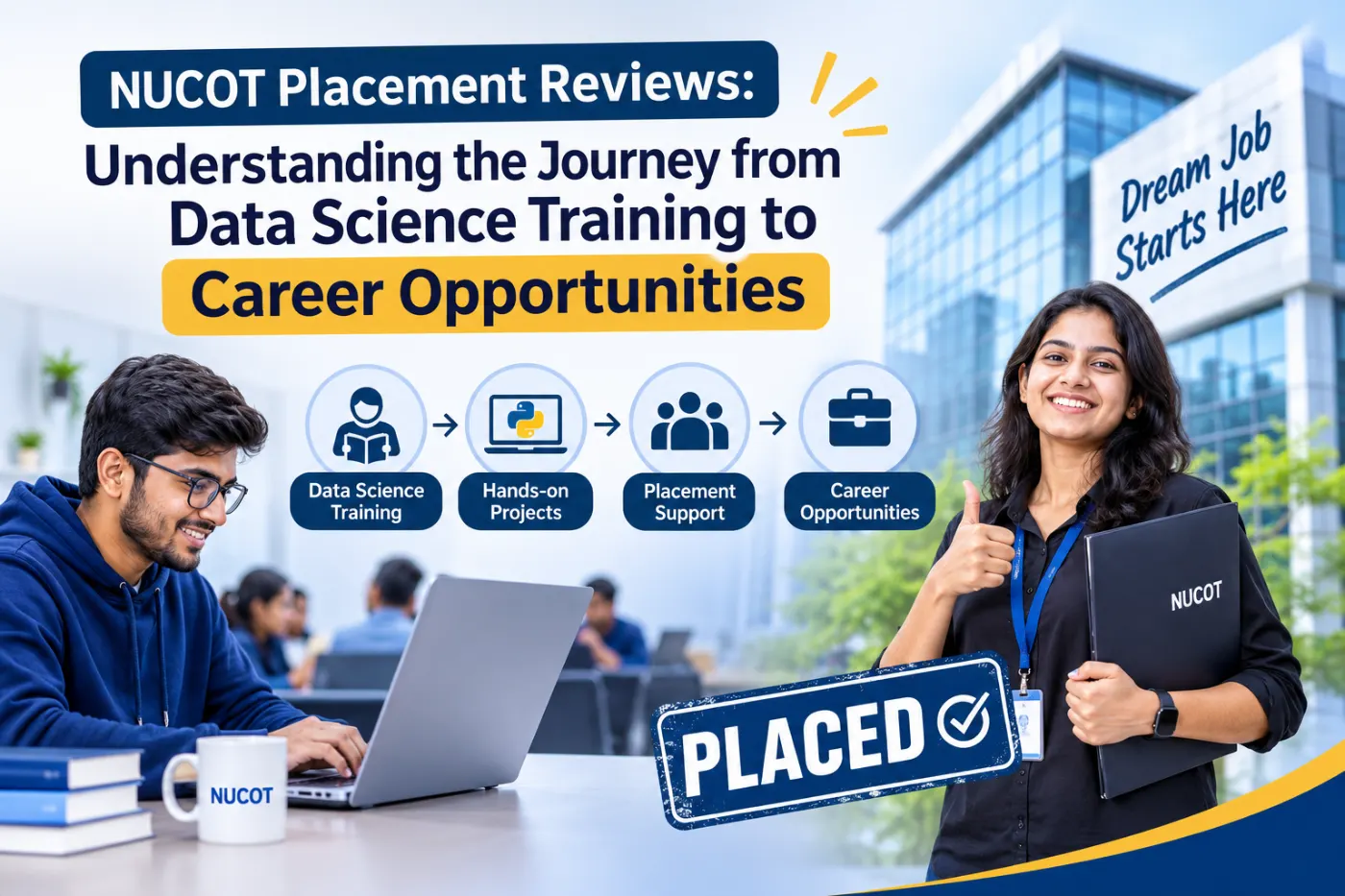
This article explains the different stages of career preparation and what learners should evaluate when exploring NUCOT’s training and placement support.
Why Are NUCOT Placement Reviews Important to Students?
A course syllabus explains the technical subjects covered during training. However, students also want to understand how the learning experience connects with career preparation.
NUCOT placement reviews can be one source of information for learners researching the institute. When reading these reviews, it is useful to look beyond the final job outcome and understand the steps involved.
For example, consider whether a review explains:
- Which course the candidate completed
- What technical skills were developed
- Whether practical assignments or projects were included
- How resume preparation was handled
- Whether mock interviews were conducted
- What kind of interview opportunities were explored
- How the candidate prepared for the recruitment process
These details can help prospective students understand the overall training and career preparation journey.
Step 1: Build the Technical Foundation
A candidate’s career preparation begins with developing relevant technical knowledge.
For learners exploring Data Science, this generally involves understanding Python, SQL, statistics, data analysis, visualisation, and Machine Learning.
NUCOT’s Data Science with Python and GenAI programme covers areas such as:
Python programming: Understanding programming fundamentals and applying Python to data-related tasks.
SQL: Learning how to retrieve and organise information from databases.
Data analysis: Working with datasets, handling missing information, and identifying patterns.
Statistics: Understanding distributions, relationships, and analytical concepts.
Data visualisation: Using Power BI, Tableau, and Python libraries to communicate insights.
Machine Learning: Exploring algorithms, model development, and evaluation.
Generative AI: Understanding modern AI applications and large language models.
Developing a foundation in these areas can help learners explore different technical roles. However, completing a syllabus alone does not establish job readiness. Regular practice and independent problem-solving are also important.
Step 2: Practise Through Projects and Assignments
Practical experience helps learners understand how technical concepts are applied.
For example, a Data Science learner can work on a sales analysis project to identify monthly trends, compare product performance, and present findings through a dashboard.
Other practice activities may include:
- Cleaning datasets using Python and Pandas
- Writing SQL queries to retrieve information
- Performing exploratory data analysis
- Creating Power BI or Tableau dashboards
- Developing basic Machine Learning models
- Evaluating model performance
These activities can help candidates explain their technical knowledge during interviews.
When comparing Data Science training in Bangalore, students should ask whether assignments and project work are part of the programme and how they receive feedback.
Step 3: Prepare a Clear and Relevant Resume
A resume is often the first document an employer reviews when evaluating a job application.
Freshers may find it difficult to describe their skills because they have limited professional experience. In such cases, academic projects, technical assignments, internships, certifications, and relevant skills can help communicate their capabilities.
A Data Science fresher’s resume may include:
- Python and SQL skills
- Data analysis and visualisation tools
- Machine Learning fundamentals
- Academic or training projects
- Relevant certifications
- Education and internship experience
The information should be accurate and should reflect what the candidate can actually explain or demonstrate.
Resume preparation and profile guidance are useful parts of career support because they help candidates present their learning and skills more clearly.
Step 4: Understand the Importance of Mock Interviews
Technical interviews often evaluate more than theoretical knowledge. Candidates may need to explain code, discuss project decisions, interpret datasets, and solve practical problems.
Mock interviews provide an opportunity to practise answering questions in an interview-like setting.
For example, a Data Science candidate may be asked:
- What is the difference between a list and a tuple in Python?
- How do SQL joins work?
- What is data cleaning?
- What is the difference between supervised and unsupervised learning?
- How do you evaluate a Machine Learning model?
- How would you explain a project you completed?
Practising these questions can help learners identify knowledge gaps and improve their ability to communicate technical concepts.
NUCOT includes mock interview and resume preparation support as part of its career preparation approach. Learners should confirm the applicable support process and expectations with the training team.
Step 5: Explore Relevant Job Opportunities
After developing technical skills and preparing for interviews, candidates can begin exploring relevant employment opportunities.
Depending on their knowledge, projects, educational background, and interview readiness, learners may research roles such as:
- Data Analyst
- Junior Data Analyst
- Python Developer
- Business Intelligence Analyst
- Junior Machine Learning Engineer
- Data Science Trainee
Job titles and eligibility requirements differ between employers. Candidates should read individual job descriptions carefully instead of applying only because a position contains the words Data Science or AI.
Understanding NUCOT Placement Assistance
One of the most common searches related to training institutes is Data Science course with placement assistance in Bangalore.
It is important to understand what placement assistance means before enrolling.
At NUCOT, career preparation support includes resume guidance, mock interviews, and assistance in exploring relevant opportunities. The objective is to help learners prepare for recruitment processes after developing their technical skills.
However, placement assistance is not a guaranteed job offer. Final employment decisions depend on several factors, including:
- Technical knowledge and practical skills
- Communication and problem-solving abilities
- Resume suitability
- Interview performance
- Employer eligibility criteria
- Available job openings and business requirements
Prospective students should ask for written details about the placement assistance process, eligibility requirements, and the duration and scope of support.
What Should You Look for in NUCOT Placement Reviews?
When researching NUCOT placement reviews, consider reading multiple experiences rather than focusing only on a single success story.
A useful review should ideally provide context about the learner’s background, training experience, preparation, and employment outcome.
For example, a candidate who had a career gap may have different preparation needs from a recent graduate. Similarly, someone transitioning from a non-IT background may need more time to build programming fundamentals.
Reading different experiences can help prospective learners understand that career journeys are not identical.
You should also compare reviews with the course information available on the official website and ask the institute directly about anything that remains unclear.
NUCOT Data Science Training in Bangalore
NUCOT offers Data Science with Python and GenAI training through online and offline learning options.
The programme is relevant to fresh graduates, working professionals, and learners from different educational backgrounds who want to develop technical knowledge in Data Science and AI.
The curriculum covers Python, SQL, statistics, data analysis, visualisation, Machine Learning, and Generative AI. Learners can also explore tools and libraries such as NumPy, Pandas, Scikit-learn, TensorFlow, Power BI, and Tableau.
For students searching for NUCOT Bangalore reviews, NUCOT Data Science course, or Data Science training near Indiranagar, the official course page provides further programme information.
Explore the course here:
Frequently Asked Questions About NUCOT Placements
Does NUCOT provide placement assistance after Data Science training?
NUCOT provides career preparation support, including resume guidance and mock interviews. Learners should confirm the specific placement assistance terms and eligibility conditions before joining.
Can freshers apply for Data Science jobs after training?
Freshers can explore suitable entry-level opportunities after developing the required technical skills, practising projects, and preparing for interviews. Employer requirements vary.
Does completing a Data Science course guarantee a job?
No training course should be treated as an automatic job guarantee unless a specific written agreement clearly states the applicable terms. Placement assistance and guaranteed employment are different.
What should students check before enrolling in a placement-oriented course?
Students should review the curriculum, course fees, duration, practical training, trainer support, resume preparation, mock interviews, and written placement assistance conditions.
Final Thoughts
A career journey involves more than completing a training programme. Learners need to develop technical skills, practise projects, prepare a relevant resume, improve interview communication, and explore suitable opportunities.
When reading NUCOT placement reviews, look for details about the entire journey rather than judging an institute only by individual employment outcomes.
If you are considering Data Science and GenAI training in Bangalore, explore NUCOT’s course structure, understand the career preparation support available, and clarify all programme terms before enrolling. An informed decision is a better starting point for building a career in technology.