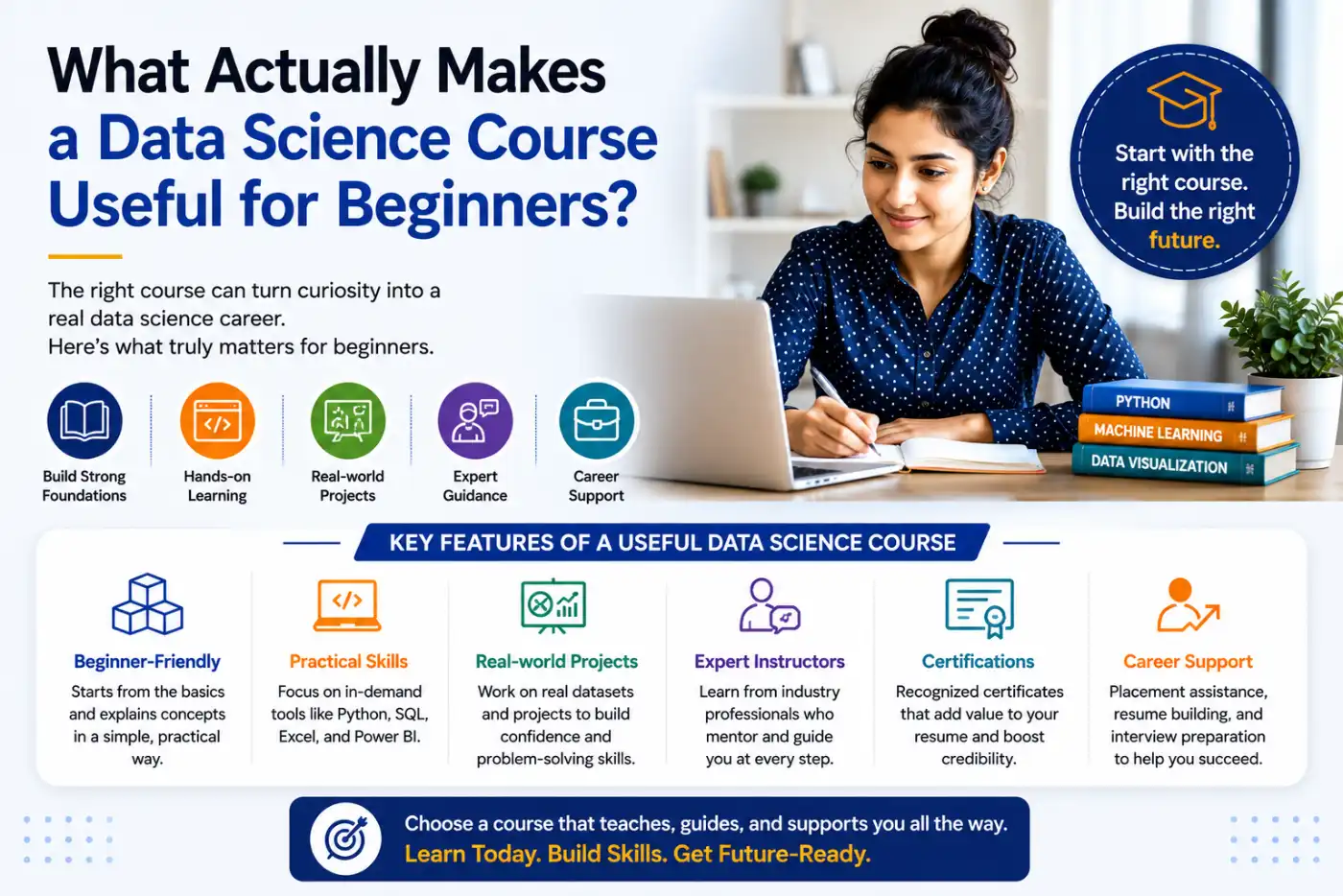
Choosing a Data Science course can be confusing, especially for someone starting without a technical background. Course descriptions often mention Python, Machine Learning, Artificial Intelligence, SQL, projects, certifications and career support. With so many options available, beginners may find it difficult to understand which features genuinely contribute to learning.
A useful Data Science course should not simply provide a long list of technologies. It should help learners move gradually from fundamental concepts to practical application and develop the ability to solve problems using data.
For students comparing institutes, reading NUCOT Reviews, NUCOT placement reviews, or NUCOT reviews for freshers can be one part of the research process. However, reviews should be considered alongside curriculum, practical training, projects, learning support and career preparation.
This guide explains the factors beginners should examine before choosing a Data Science training program.
A Clear Learning Path Matters
One of the first things beginners should examine is the structure of the curriculum.
Data Science includes several connected areas. Python, statistics, SQL, data analysis, visualization and Machine Learning are not isolated subjects. They work together as part of a larger workflow.
For someone starting from scratch, a logical progression could begin with programming fundamentals, followed by data manipulation and analysis, then statistics and visualization, before moving toward Machine Learning and more advanced Artificial Intelligence concepts.
A structured curriculum helps prevent beginners from feeling overwhelmed by advanced terminology.
Instead of asking only how many technologies a course covers, prospective students should ask how those technologies are connected and whether the sequence makes sense for someone at their current skill level.
Python Should Be Taught as a Practical Skill
Python is widely used in Data Science, making it an important foundation for beginners.
However, learning Python for Data Science is different from simply learning programming syntax.
Students should understand variables, conditions, loops, functions and data structures before applying Python to datasets.
They should then gradually become comfortable with tools used for data analysis and visualization.
The important question is not whether Python appears in the syllabus. It is how students are expected to use Python.
Practical exercises can help learners understand how programming concepts are applied to actual data problems.
SQL Should Not Be Overlooked
Data Science students sometimes focus heavily on Python and Machine Learning while overlooking SQL.
SQL is an important skill because business information is frequently stored in databases. Data professionals may need to retrieve records, combine tables, filter information and create summaries before analysis begins.
A useful beginner program should therefore introduce SQL in a practical way.
Students can learn through scenarios involving customers, sales, products or other datasets.
This gives them a better understanding of why SQL is used rather than treating it as another subject to memorize.
Statistics Builds Analytical Thinking
Statistics is another fundamental part of Data Science.
Beginners don’t necessarily need to become statisticians, but they should understand concepts that help them interpret data.
Topics such as averages, distributions, probability, correlation and variation can help learners understand what their datasets are showing.
Statistics becomes particularly useful when students begin working with Machine Learning models.
Without a basic understanding of statistical thinking, it can be difficult to interpret results properly.
Practical Training Makes a Difference
One of the biggest differences between simply watching lessons and actually learning Data Science is practical application.
Imagine learning about missing values in a dataset.
A theoretical explanation may tell you what missing values are. A practical exercise forces you to decide how to handle them.
Should they be removed?
Should they be replaced?
Could their absence itself provide useful information?
These decisions encourage students to think rather than simply follow instructions.
For this reason, anyone researching a data science training institute in Bangalore should examine how much practical work is included in the learning process.
Projects Should Reflect Real Problems
Projects are another important factor.
A beginner project doesn’t need to be extremely complicated. What matters is whether it provides an opportunity to apply multiple concepts.
For example, a student could analyse sales data and investigate trends, customer behaviour or product performance.
A more advanced project might involve building a Machine Learning model to make predictions.
The best projects encourage students to understand the complete process:
Problem → Data → Preparation → Analysis → Model → Evaluation → Findings
Being able to explain this process is often more valuable than simply having a project certificate.
Don’t Judge a Course Only by Its Technology List
A course may mention Artificial Intelligence, Deep Learning, Generative AI, Machine Learning and numerous other technologies.
That can sound impressive.
But beginners should ask whether these subjects are appropriate for their current level.
Learning advanced concepts without understanding the fundamentals can create confusion.
A strong beginner program should introduce complexity progressively.
Once learners understand Python, data handling, statistics and Machine Learning fundamentals, they can explore more advanced AI applications with a much stronger foundation.
Mentorship and Doubt Resolution Matter
Self-learning resources are widely available, but beginners can still benefit from structured guidance.
When a learner encounters a Python error, doesn’t understand a statistical concept or receives unexpected results from a Machine Learning model, timely guidance can prevent frustration.
Students should therefore ask how doubts are handled.
Is there an opportunity to ask questions during sessions?
Can learners receive feedback on projects?
Is practical work reviewed?
These details can influence the overall learning experience.
Career Preparation Is Different From Training
Another important distinction is between technical training and career preparation.
Learning Python and Machine Learning doesn’t automatically mean someone is ready for a Data Science interview.
Students may also need to learn how to present projects, explain technical decisions, prepare a resume and communicate their skills.
When reading NUCOT placement reviews, prospective students should therefore look beyond broad statements about placement support and understand what type of career preparation is actually provided.
Similarly, when comparing a data science training institute in Bangalore with placement, students should ask specific questions about resume guidance, mock interviews, project discussions and job-search support.
This creates a more realistic understanding of what a training program can and cannot provide.
Reviews Are Useful When Read Carefully
Online reviews can help students understand different experiences.
Searches such as NUCOT Reviews may bring together positive experiences, critical feedback and neutral observations.
Instead of looking only at the star rating, examine the details.
A useful review may discuss the course structure, teaching approach, projects, learning environment or career preparation.
It is also important to remember that different students can have different experiences.
A fresher beginning with no programming knowledge may require more foundational support than someone who already has technical experience.
Therefore, NUCOT reviews for freshers can be useful for understanding perspectives from beginners, but they should still be considered alongside other information.
The Course Should Match Your Starting Level
There is no single Data Science course that is perfect for everyone.
A graduate with a programming background may be able to move quickly through Python.
Someone from a non-technical background may need more time to understand programming concepts.
A working professional may prioritize flexible schedules.
Before enrolling, beginners should identify their own starting point.
Ask yourself:
Do I understand basic programming?
Have I worked with datasets before?
Am I comfortable with mathematics and statistics?
How much time can I dedicate to practice?
What kind of Data Science role am I targeting?
The answers can help determine which learning format is appropriate.
Portfolio Development Should Be Part of the Journey
A beginner should ideally finish a Data Science program with more than notes and certificates.
Projects can become part of a professional portfolio.
A portfolio might contain Python analysis, SQL work, dashboards, Machine Learning projects or other relevant applications.
Each project should be explainable.
A recruiter or interviewer should be able to understand what problem was addressed, what data was used and what conclusions were reached.
This is especially useful for freshers who don’t yet have professional experience.
Ask Questions Before Paying
Before selecting a course, prospective students should speak with the training provider and ask practical questions.
What exactly is included in the curriculum?
How much practical work is involved?
What projects will students complete?
How are doubts handled?
What tools will students use?
How does career preparation work?
Are there opportunities to practise interviews and project explanations?
Clear answers can help students compare programs more objectively.
What Makes a Course Truly Useful?
Ultimately, a useful Data Science course should help a beginner progress through several stages.
First comes understanding.
Then practice.
Then application.
Finally, the learner should be able to explain and demonstrate what they have learned.
A course that simply moves quickly through a long syllabus may not provide the same value as a program that gives students time to practise concepts and work through problems.
The quality of learning therefore depends on more than the number of topics covered.
Final Thoughts
For beginners, choosing a Data Science course should be a research-based decision rather than a decision based entirely on advertisements or online ratings.
Look at the curriculum, practical training, projects, Python and SQL coverage, statistics, Machine Learning, mentorship and career preparation.
Reviews, including NUCOT Reviews, can provide another perspective, while NUCOT placement reviews and NUCOT reviews for freshers may help prospective students identify questions worth asking before enrolling.
The most important consideration, however, is whether the program can help you develop skills that you can actually apply.
A good learning journey should leave you capable of working with data, explaining your decisions, completing practical projects and continuing to develop your skills independently.
For someone beginning a Data Science career in Bangalore, that foundation can be far more valuable than simply completing a course with an impressive list of technologies.